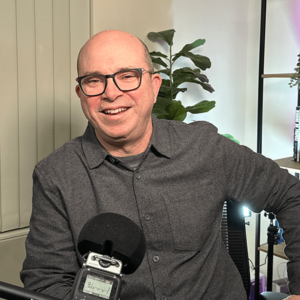
I had a conversation on my Biz Bites for Thought Leaders podcast last year that resonates with every business owner I work with.
We were talking with Daniel Lalic about why business owners struggle with the operational side of their business, and Daniel said something that really hit home: “Every business has started with the owner either being great at delivering a service or creating a product. They never really got into business to look at P&Ls and balance sheets.”
The same is true for content creation. You didn’t start your business to become a content creator. You started it because you’re passionate about solving a specific problem. You’re an expert at what you do.
But here’s the reality: if you’re not creating content, you’re invisible. Your competitors aren’t better than you. They’re just louder.
So you’re stuck. You need to create content to grow your business. But creating content takes time away from actually running your business.
What if I told you that 8 hours of your time per year could create everything your business needs for thought leadership?
Not 8 hours per week. Not 8 hours per month. 8 hours total.
Let me show you how.
The Content Overwhelm Epidemic
Let’s be honest about what content creation looks like for most business owners.
You know you should be posting on LinkedIn. So you spend 30 minutes crafting a post. You agonise over the wording. You wonder if it sounds too salesy or not salesy enough. You hit publish and hope someone notices.
You know you should be writing blog posts. So you block out a few hours on a Saturday morning. You stare at a blank screen. You write a few paragraphs. You delete them. You start over. Three hours later, you have a mediocre 800-word post that you’re not even proud of.
You know you should be creating videos. But the thought of setting up a camera, figuring out lighting, recording yourself talking, editing the footage, and uploading it somewhere makes you want to take a nap.
So you do what most people do: you create sporadically. When you remember. When you have time. When inspiration strikes.
The result? Inconsistent output. Mediocre quality. Constant guilt about not doing enough. And worst of all, minimal impact on your business.
There has to be a better way. And there is.
The Content Multiplication Strategy
Here’s the fundamental shift that changes everything: stop thinking about creating individual pieces of content. Start thinking about creating source material that multiplies.
One podcast conversation isn’t just one piece of content. It’s the source material for dozens of assets.
Let me break down exactly what we create from a single 30-minute podcast episode:
Audio Content:
- Full podcast episode on Spotify, Apple Podcasts, and all major platforms
- Audiograms (short audio clips with visuals for social media)
- Audio snippets for Instagram Stories and Reels
Video Content:
- Full episode on YouTube
- Short-form video clips for YouTube Shorts, Instagram Reels, TikTok
- Video snippets for LinkedIn
Written Content:
- Full transcript
- Blog post (1,000-1,500 words)
- LinkedIn article
- 6-8 social media posts
- Email newsletter content
- Quote graphics with key insights
SEO Assets:
- Optimised show notes
- Keyword-rich descriptions
- Searchable transcripts
- Backlinks from podcast directories
That’s over 20 pieces of content from one conversation. And we’re just getting started.
Now multiply that by 16-20 episodes per year. That’s over 300 pieces of content. From 8 hours of your time.
That’s not magic. That’s strategy.
Why Most Content Strategies Fail
Before I explain how this works, let me tell you why most content strategies fail. Because understanding the problem is half the solution.
Reason 1: They require too much time. Most content strategies assume you have hours every week to dedicate to creation. But you don’t. You’re running a business.
I had a conversation on Biz Bites about implementing systems in business. The insight was clear: if your system requires you to completely change how you work, people won’t use it. And therefore it’s a bad investment.
If your content strategy requires you to become a full-time content creator, it’s not sustainable. It’s a bad investment of your time.
Reason 2: They require too many skills. Writing, video editing, graphic design, SEO, social media strategy. That’s not one job. That’s five jobs. And you’re already doing three jobs just running your business.
Reason 3: They lack consistency. When content creation depends on finding time and motivation, it’s inconsistent. And inconsistent content doesn’t build momentum.
Throughout Biz Bites for Thought Leaders this year, I’ve heard this theme repeatedly: “When you have predictable systems, you get predictable outcomes.”
Without a system, your content creation is unpredictable. And unpredictable doesn’t build authority.
Reason 4: They’re not sustainable. You can hustle for a month. Maybe three months. But you can’t maintain that pace while also serving clients, managing a team, and having a life.
Reason 5: They don’t leverage your strengths. You’re brilliant at what you do. You can talk about your expertise for hours. But sitting down to write? That’s a different skill. And it doesn’t come naturally to everyone.
The 8-hour content engine solves all of these problems. Here’s how.
The Power of Conversation
Here’s what I’ve learned after producing hundreds of podcast episodes: the best content doesn’t come from sitting alone at a computer. It comes from conversation.
When you’re talking with someone about your expertise, something magical happens. You’re not trying to write the perfect sentence. You’re just explaining what you know. Sharing stories. Answering questions. Thinking out loud.
The result is authentic, engaging, and valuable content. Without the painful process of “creating content.”
Think about it. You probably have conversations with clients every week where you explain your methodology, share insights, and solve problems. Those conversations are valuable. They’re just not captured.
A podcast captures those conversations. And once they’re captured, they can be repurposed infinitely.
I had a conversation on Biz Bites for Thought Leaders with Amanda Johnson about storytelling and connection. As Amanda shared a powerful insight: “Telling that story is a really powerful way to connect with the audience, help them to understand, not only understand the message more intuitively, but it’s really a powerful way to connect with them.”
Your conversations contain your stories. Your insights. Your unique perspective. Everything that makes you valuable to your clients.
Podcasting simply captures and amplifies those conversations.
The 8-Hour Breakdown
Let me show you exactly how 8 hours of recording creates a year of content.
Recording Sessions: 8 hours total, typically broken into 16-20 episodes of 20-30 minutes each. You can record these in batches (4 episodes in one day) or spread them out. Whatever works for your schedule.
Topics: Each episode focuses on one aspect of your expertise. A common client challenge. A framework you use. A case study. A lesson you’ve learned. You already know this stuff. You just need to talk about it.
Format: Conversational. Not scripted. Not rehearsed. Just you talking with a co-host who asks good questions and keeps the conversation flowing.
Your Time Investment: Just the recording time. Everything else, we handle.
From those 8 hours, here’s what gets created:
Weeks 1-52: A new podcast episode every week Weeks 1-52: A new YouTube video every week Weeks 1-52: A new blog post every week Daily: Social media content across all platforms Weekly: Email newsletter content Ongoing: SEO-optimised content that continues attracting traffic
That’s 52 podcast episodes, 52 YouTube videos, 52 blog posts, and hundreds of social media posts. From 8 hours of your time.
The Professional Co-Hosting Advantage
Now, you might be thinking: “Okay, but I still need to figure out what to talk about. How to structure episodes. How to make it interesting.”
That’s where professional co-hosting changes everything.
You don’t show up with a script. You don’t need to plan the episode structure. You don’t need to worry about keeping it engaging.
Your co-host does that. They’ve prepared. They know your expertise. They ask the questions that help you articulate what you know. They guide the conversation so you can focus on being the expert.
It’s the difference between giving a presentation (stressful, time-consuming, requires preparation) and having a conversation (natural, easy, requires no preparation).
You just show up and talk about what you know. Everything else is handled.
Chris McNeil explained it perfectly on Biz Bites: “It’s doing it very consciously and intentionally with a method. Leading thought to specific places.”
That’s what professional co-hosting does. It leads the conversation to places that showcase your expertise, demonstrate your value, and position you as a thought leader.
The Repurposing System
Here’s where the real leverage happens. Once you’ve recorded an episode, our team goes to work.
Step 1: Production. We edit the audio, add intro/outro music, optimise sound quality, and prepare it for distribution.
Step 2: Distribution. We upload to all major podcast platforms, YouTube, and your website. We create optimised descriptions, show notes, and metadata for SEO.
Step 3: Transcription. We create a full transcript of the episode. This becomes the foundation for all written content.
Step 4: Content Creation. We turn the transcript into a blog post, social media content, email newsletter content, and quote graphics.
Step 5: Scheduling. We schedule everything to publish consistently across all platforms.
You record once. We create dozens of assets. Those assets work for you 24/7, reaching people on every platform they use.
I had a conversation on Biz Bites about marketing and differentiation. The insight was simple but powerful: “How many times have you heard people saying, ‘Oh, I don’t do any marketing.’ Really? You’ve never talked to anybody ever?”
Marketing isn’t just ads and social media posts. It’s how you connect with people who need what you offer. And podcasting creates those connection points automatically, consistently, and permanently.
The Compound Effect of Consistency
Here’s what most people underestimate: the power of consistency over time.
One podcast episode? Minimal impact. Ten episodes? Starting to build momentum. Twenty episodes? People are noticing. Fifty episodes? You’re established as a thought leader.
But here’s the thing: most people never get to fifty episodes. Because creating content consistently is hard.
Unless you have a system.
When you commit to 8 hours of recording per year, you’re committing to consistency. Not because you’re working harder. Because you’ve built a system that makes consistency easy.
And consistency is what builds authority. It’s what builds trust. It’s what turns you from “someone who has a podcast” to “a thought leader in your industry.”
Throughout Biz Bites for Thought Leaders this year, I’ve explored this theme with multiple guests. The consistent message: systems that create maximum output from minimum input are what separate high-performing businesses from everyone else.
The 8-hour content engine is the system that allows you to consistently achieve maximum impact from minimum input.
Real Client Results
Let me share a real example. One of my clients is a business consultant. Brilliant strategist. But completely invisible online.
We started her podcast in January. She recorded 8 hours over two months. We turned that into 20 episodes, released weekly.
By June, she was getting enquiries from people who’d found her through her podcast. By September, she’d closed four high-value clients who specifically mentioned her podcast as the reason they reached out.
Her time investment? 8 hours of recording. Plus about 30 minutes per month reviewing content before it went live.
Her return? Multiple six figures in new business. And a thought leadership platform that continues attracting clients.
That’s the power of the 8-hour content engine.
The Mental Freedom Factor
But here’s what might be even more valuable than the business results: the mental freedom.
When you have a content system that works, you stop feeling guilty about not posting enough. You stop stressing about what to write. You stop comparing yourself to people who seem to be everywhere online.
You know you’re showing up consistently. You know you’re creating valuable content. You know you’re building your thought leadership platform.
And you’re doing it without sacrificing your actual work. Without becoming a full-time content creator. Without burning out.
That peace of mind? That’s priceless.
Another conversation from Biz Bites captured this perfectly. We were discussing why business owners struggle with operational details: “You got to think about every business has started with the owner either being great at delivering a service or creating a product. They never really got into business to look at operational details.”
The same principle applies to content creation. You didn’t get into business to become a content creator. You got into business to solve problems for clients.
The 8-hour content engine allows you to stay focused on what you do best while still building the thought leadership platform you need to grow.
Getting Started: Your First 8 Hours
So how do you actually implement this? Here’s the roadmap:
Step 1: Identify your core topics. What are the 15-20 things you talk about with clients regularly? Common challenges, frameworks, methodologies, case studies. Make a list.
Step 2: Schedule your recording sessions. Block out time for recording. Whether that’s one day per month or one day per quarter, get it on the calendar.
Step 3: Show up and talk. That’s it. Just have conversations about your expertise. Your co-host handles everything else.
Step 4: Review and approve. Before content goes live, you get a chance to review. Make sure you’re comfortable with everything.
Step 5: Let the system work. Once content is approved, it gets distributed automatically. You don’t need to do anything else.
That’s the entire process. Simple. Sustainable. Effective.
The Investment That Pays Forever
Here’s the final thing to understand: the content you create doesn’t just work for you this year. It works forever.
That podcast episode you record in January 2026? Someone will discover it in 2029. And it will build trust with them just as effectively as it does with someone who listens today.
That blog post? It’ll continue ranking in search results and attracting traffic. That YouTube video? It’ll keep getting views and building your authority.
You invest 8 hours once. The return compounds indefinitely.
Compare that to traditional marketing. You run an ad campaign. It works while you’re paying for it. Then it stops.
Or networking events. You attend, make connections, follow up. Then you need to do it again next month.
Content is different. It’s an asset that appreciates over time. The more you create, the more valuable your library becomes.
Amanda Johnson shared an insight on Biz Bites about the long-term impact of content: “It’s one thing for me to share the story of this incredible event that happened with this client. But it’s another for them to then talk about their experience and go out and share that with the world.”
Your content creates a ripple effect. People share it. They reference it. They recommend it. And that ripple continues long after you’ve recorded the episode.
The Choice Is Yours
You have a choice to make. You can keep trying to find time to create content sporadically. Keep feeling guilty about not doing enough. Keep watching your competitors build their thought leadership while you stay invisible.
Or you can build a system. Invest 8 hours. Create a year of content. Establish yourself as a thought leader. Attract ideal clients. Grow your business.
Without becoming a content machine. Without sacrificing your actual work. Without burning out.
The 8-hour thought leadership engine isn’t about working harder. It’s about working smarter.
Your expertise deserves to be heard. Your ideal clients deserve to find you. Your business deserves to grow.
And you deserve a content strategy that actually works for your life.
Eight hours. That’s all it takes.
P.S. What’s 8 hours of your time worth if it generates clients for the next 5 years? Let’s do the maths together. That ROI might surprise you. DM me.
Anthony Perl is the founder of Podcasts Done For You and host of Biz Bites for Thought Leaders. He helps business leaders establish thought leadership through professional podcast co-hosting, turning 8 hours of recording into year-round multi-platform content that attracts ideal clients and grows businesses.